Hard Water in Chester County: What It Does to Your Water Heater
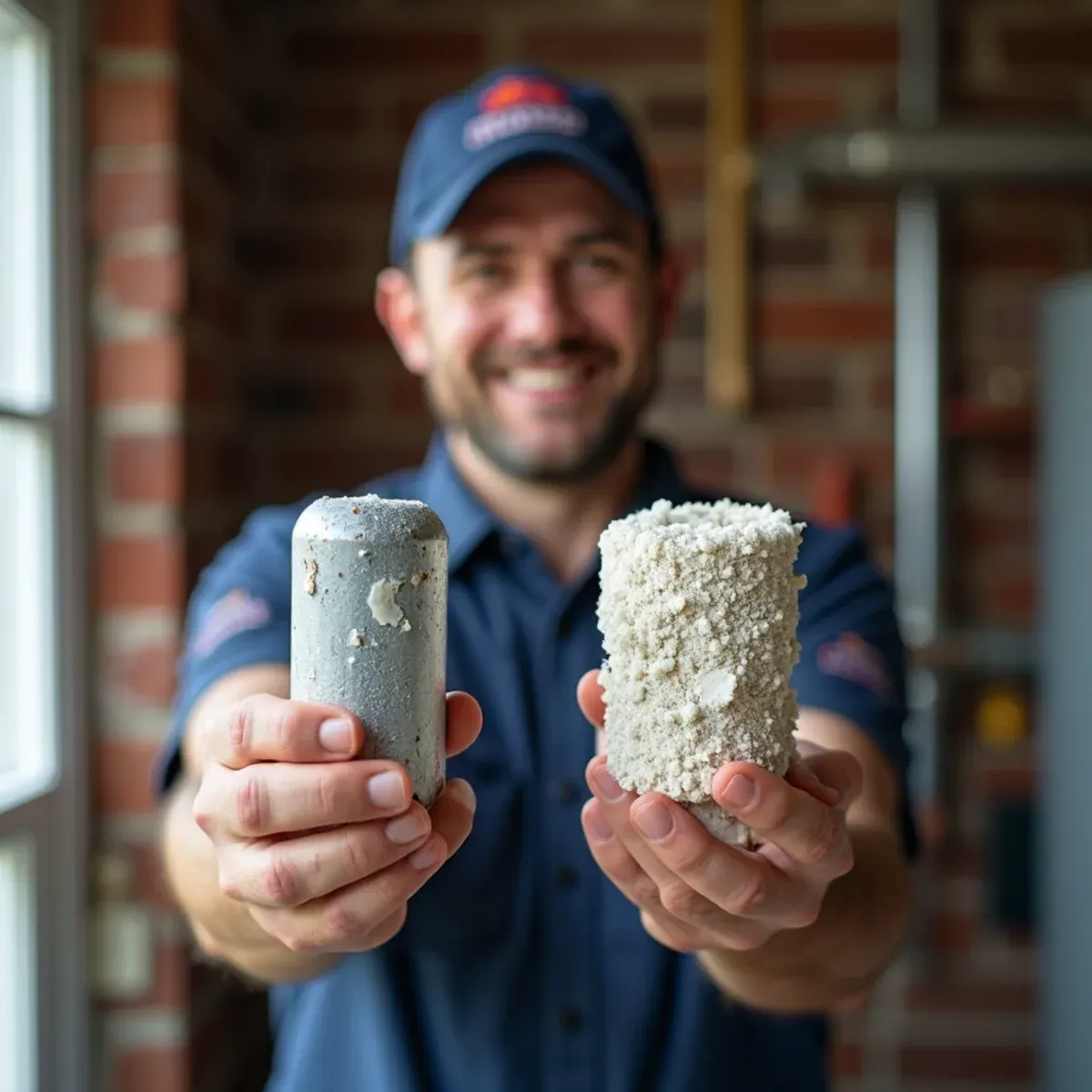
In Chester County, hard water severely damages water heaters because local groundwater contains 12 to 16 grains per gallon (GPG) of dissolved limestone minerals that precipitate into rock-hard calcium carbonate sediment when heated past 130°F, causing loud tank rumbling noises, premature electric heating element burnout, and cutting appliance lifespan by half.
Whether your home is served by municipal water authorities in West Chester and Exton or relies on a private bedrock well in Downingtown, the regional geological landscape has a massive direct influence on your home's mechanical equipment. Chester County sits atop ancient karst limestone and dolomite carbonate formations. As groundwater filters through subterranean rock strata, it dissolves heavy concentrations of calcium bicarbonate and magnesium salts. When this mineral-rich water enters your water heater, thermal energy drives dissolved minerals out of solution, coating bottom tank plates, heat exchangers, and electrical elements in an insulating crust of stone. Understanding this chemical destruction is the key to preventing early water heater replacement.
The Geology of Chester County: Why Our Water Contains 12 to 16 GPG Hardness
Water hardness is scientifically measured in grains per gallon (GPG) or milligrams per liter (mg/L). The Water Quality Association (WQA) classifies water exceeding 10.5 GPG as 'very hard.' Across Chester County, residential water testing routinely records mineral concentrations between 12 and 16 GPG (205 to 275 mg/L), placing our regional water among the hardest in the Mid-Atlantic.
When water is cool, dissolved calcium remains in an aqueous bicarbonate state. However, the moment your burner or heating elements elevate water temperature above 130°F, a chemical decomposition occurs: soluble calcium bicarbonate converts into insoluble calcium carbonate (limestone scale) and carbon dioxide gas. This newly formed mineral scale immediately adheres to the hottest metal surfaces inside your water heater.
Chester County Water Hardness & Appliance Impact Matrix
Review how regional water hardness levels directly affect water heater energy consumption, recovery rates, and longevity:
| Hardness Rating | Chester County Service Areas | Grains Per Gallon (GPG) | Efficiency Loss per Year | Expected Tank Lifespan |
|---|---|---|---|---|
| Moderately Hard (7–10 GPG) | Surface reservoir blends (Aqua PA) | 120–170 mg/L | 8%–12% fuel penalty | 9–12 years with annual flush |
| Hard (10–14 GPG) | West Chester Borough / East Goshen | 170–240 mg/L | 15%–22% fuel penalty | 6–8 years without treatment |
| Very Hard (14–18 GPG) | Exton Valley / Downingtown limestone | 240–310 mg/L | 25%–35% fuel penalty | 4–6 years before tank leak |
| Extremely Hard (18+ GPG) | Private agricultural bedrock wells | 310+ mg/L | 40%+ fuel penalty | 3–5 years; rapid tankless lockouts |
The 4 Stages of Water Heater Destruction by Hard Water Scale
Untreated mineral scale systematically destroys water heating appliances through four distinct failure stages:
Every major tankless water heater manufacturer (Navien, Rinnai, Noritz) includes an explicit clause in their warranty: heat exchanger failures caused by water hardness exceeding 12 GPG (200 mg/L) without an approved scale prevention system are completely excluded from warranty coverage.
The 5-Step Annual Water Heater Descaling & Flush Protocol
To prevent calcium accumulation from destroying your water heater, Madrid Plumbers recommends this comprehensive annual maintenance routine:
Isolate Electrical Power or Gas Supply
Switch off the dedicated 240V double-pole circuit breaker in your electrical service panel, or rotate the gas control thermostat dial to the 'PILOT' or 'OFF' position before introducing cold flushing water.
High-Velocity Sediment Power Flush
Connect a commercial-grade 3/4-inch heavy-duty garden hose to the bottom brass drain valve and run it to a floor drain or sump pit. Open the drain valve while leaving the cold-water inlet valve fully open to agitate and blow out loose calcium sediment under 60 PSI municipal pressure.
Chemical Descaling for Tankless Heat Exchangers
For tankless units, connect a submersible utility pump and two service hoses to the dedicated isolation valve kit. Circulate four gallons of virgin food-grade white vinegar or non-toxic citric acid solution through the copper heat exchanger for 60 to 90 minutes to dissolve calcified scale.
Sacrificial Anode Rod Inspection & Replacement
Using a 1-1/16-inch deep socket and breaker bar, remove the tank's sacrificial magnesium anode rod. If the core wire is exposed by more than 50% or the rod is coated in rock scale, install a fresh high-capacity magnesium or powered titanium anode rod.
Temperature Calibration & TPR Valve Verification
Refill the tank completely until water flows bubble-free from the highest hot water faucet before restoring power. Calibrate the thermostat to precisely 120°F—hot enough to prevent Legionella bacterial growth, yet low enough to minimize thermal mineral precipitation.
Water heater popping or making rumbling noises?
Live dispatchers answering 24/7. Firm price before any work begins.
Long-Term Protection: Whole-Home Water Softeners vs. Scale Inhibitors
Flushing removes existing sediment, but it does not stop fresh minerals from entering with every gallon of water you use. Permanent protection requires whole-house water conditioning:
Chester County Water Heater Services by Madrid Plumbers
Madrid Plumbers understands how Chester County's unique water chemistry challenges residential plumbing equipment:
Have a Plumbing Emergency Right Now?
Do not wait for water damage to escalate. Call Madrid Plumbers at (858) 363-8298 for immediate local dispatch.
Frequently Asked Questions
Helpful clarifications related to this guide.
No. The popping sound is caused by trapped water boiling into steam underneath dense calcium sediment, not an impending mechanical explosion. However, the extreme localized overheating fractures the protective glass tank lining, which will eventually cause the steel tank to corrode through and flood your basement.
Have a question not listed here? Speak with an on-call plumber at (858) 363-8298
Relevant Plumbing Services
Nearby Communities Covered
Continue Reading
Need Advice on Your Home's Plumbing?
For non-emergencies, send us a question or service request. For active leaks or backups, call 24/7.