Galvanized and Lead Pipes in Pre-1940 West Chester Homes: Repair or Replace?
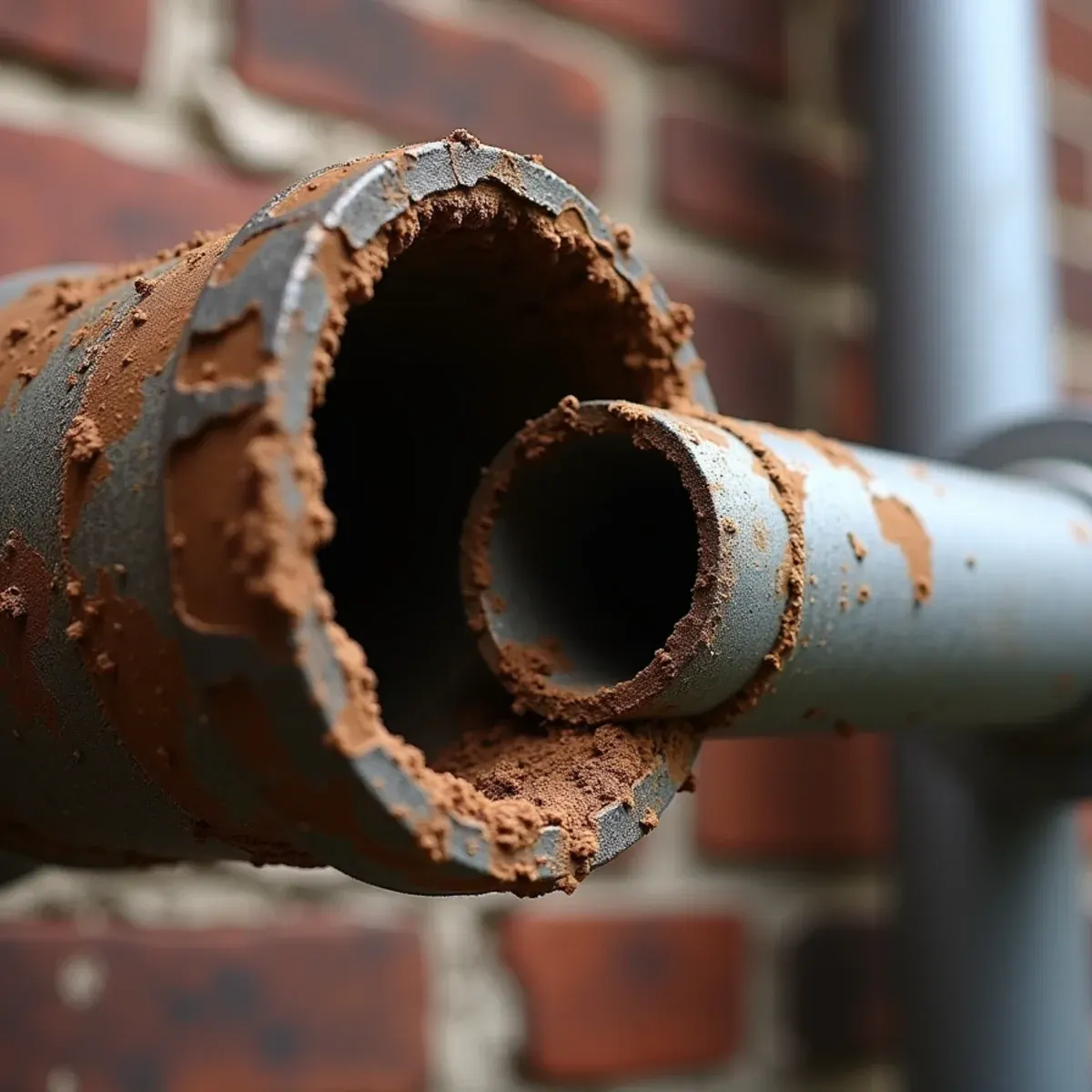
For historic pre-1940 properties, full galvanized pipe replacement in older homes is strongly recommended over temporary spot repairs because internal rust tuberculation narrows water volume by up to 80%, creates severe pinhole leak risks at brittle threaded joints, and leaches trapped lead particles into household drinking water.
With more than 42% of residential structures in the Borough of West Chester and historic hamlets like Kennett Square and Malvern built before 1940, thousands of homeowners live with original plumbing systems that have surpassed their engineered lifespans by decades. Vintage Victorian twins, brick rowhomes, and stone farmhouses frequently conceal a patchwork of galvanized iron supply lines, cast iron soil stacks, brass valves, and lead-soldered joints behind historic plaster walls. While these materials were celebrated engineering marvels a century ago, internal oxidation, galvanic decay, and health liabilities mean every homeowner must understand when to retire these antique systems.
How Galvanized Iron Pipes Fail from the Inside Out: The Tuberculation Cycle
Galvanized steel and iron pipes were manufactured by dipping raw iron tubing into baths of molten zinc. This sacrificial zinc coating was intended to protect the underlying iron from direct contact with water. However, over 50 to 80 years of exposure to chlorinated municipal water, the thin protective zinc layer dissolves completely.
Once bare iron is exposed, dissolved oxygen in the municipal water supply triggers rapid oxidation (rusting). Unlike copper or PEX, which maintain a smooth inner surface, oxidizing iron expands dramatically in volume. This generates rough, jagged mineral nodules known in hydraulic engineering as tuberculation.
Vintage vs. Modern Plumbing Pipe Comparison Matrix
Compare the performance, safety, and longevity of historical pipe materials against modern plumbing standards:
| Piping Material | Typical Era Installed | Average Lifespan | Primary Failure Mechanism | Health & Water Quality Risk |
|---|---|---|---|---|
| Lead Supply Lines | Pre-1930s | 100+ years (ductile) | Mechanical deformation, collapse | Severe neurotoxin leaching (EPA Lead Rule) |
| Galvanized Iron / Steel | 1890–1960 | 40–60 years | Internal rust scale, threaded joint shear | High iron content, trapped lead particulate |
| Rigid Copper (Type M/L) | 1950–Present | 50–70 years | Pinhole leaks from acidic well water | Lead solder joints on pre-1986 installations |
| CPVC Plastic | 1970–Present | 25–40 years | Extreme brittleness under thermal cycling | Chemical leaching; catastrophic joint cracking |
| Uponor PEX-a (Crosslinked Poly) | 2000–Present | 100+ year rating | UV exposure (if stored outdoors) | Zero corrosion, NSF-61 certified lead-free |
Lead Contamination Risks in Pre-1986 Plumbing Systems
While many homeowners believe lead pipes were banned centuries ago, lead was legally and routinely used in residential plumbing systems across Pennsylvania until the federal Safe Drinking Water Act amendments of June 1986. Pre-1940 homes present three distinct lead vectors:
Concerned about lead or rust in your older home's water?
Live dispatchers answering 24/7. Firm price before any work begins.
The 5-Step Surgical Repiping Protocol: Preserving Historic Plaster Walls
The greatest fear among historic homeowners in West Chester is that replacing old pipes requires gutting original horsehair plaster, hand-carved mouldings, and heart pine floors. Madrid Plumbers utilizes a minimally invasive surgical repiping method:
Comprehensive Non-Destructive Architectural Mapping
We map your home's mechanical pathways using acoustic sensors and thermal imaging to trace existing vertical pipe chases, chimney chases, hollow closet partitions, and crawlspaces, identifying zero-impact routes from basement to roof.
Basement Manifold & Main Supply Infrastructure
We replace obsolete galvanized and lead main valves with a modern lead-free brass ball valve and install a central Uponor PEX-a distribution manifold in your basement, allowing independent shut-off control for every bathroom and fixture.
Flexible PEX-a Fishing Through Vertical Cavities
Because Uponor PEX-a is ultra-flexible, we fish continuous supply lines through existing vertical wall voids and unused dumbwaiter or laundry shafts, completely bypassing finished parlor walls and ornate plaster cornices.
Surgical Fixture Tie-Ins in Secondary Closets
Where access to bathroom fixtures is required, we make small, precision 4-inch inspection cuts inside utility closets or vanity bases rather than cutting into decorative historic surfaces.
Hydrostatic Pressure Testing and Code Permitting
We pressurize the new system to 100 PSI, verify zero pressure drop over 24 hours, coordinate the Chester County municipal plumbing inspection, and flush the system clean before turning your fresh water back on.
The Danger of Spot Repairs: Dielectric Unions and the Domino Leak Effect
When a pinhole leak opens in a galvanized pipe, homeowners often ask a handyman to cut out the leaking 12-inch section and clamp on a piece of copper. This well-intentioned 'patch' almost always accelerates system destruction due to two scientific phenomena:
Historic Home Repiping by Madrid Plumbers
Preserving Chester County's historic architectural fabric while modernizing life-safety systems is our specialized craft:
Have a Plumbing Emergency Right Now?
Do not wait for water damage to escalate. Call Madrid Plumbers at (858) 363-8298 for immediate local dispatch.
Frequently Asked Questions
Helpful clarifications related to this guide.
Spot repairs are possible as an emergency stopgap, but they are rarely cost-effective over time. Cutting into brittle galvanized pipe transmits mechanical torque that frequently causes adjacent rusted threaded joints inside walls to start leaking. Furthermore, connecting new copper to old iron without dielectric fittings accelerates galvanic corrosion.
Have a question not listed here? Speak with an on-call plumber at (858) 363-8298
Relevant Plumbing Services
Nearby Communities Covered
Continue Reading
Need Advice on Your Home's Plumbing?
For non-emergencies, send us a question or service request. For active leaks or backups, call 24/7.